INSIDE
The comparison engine in action.
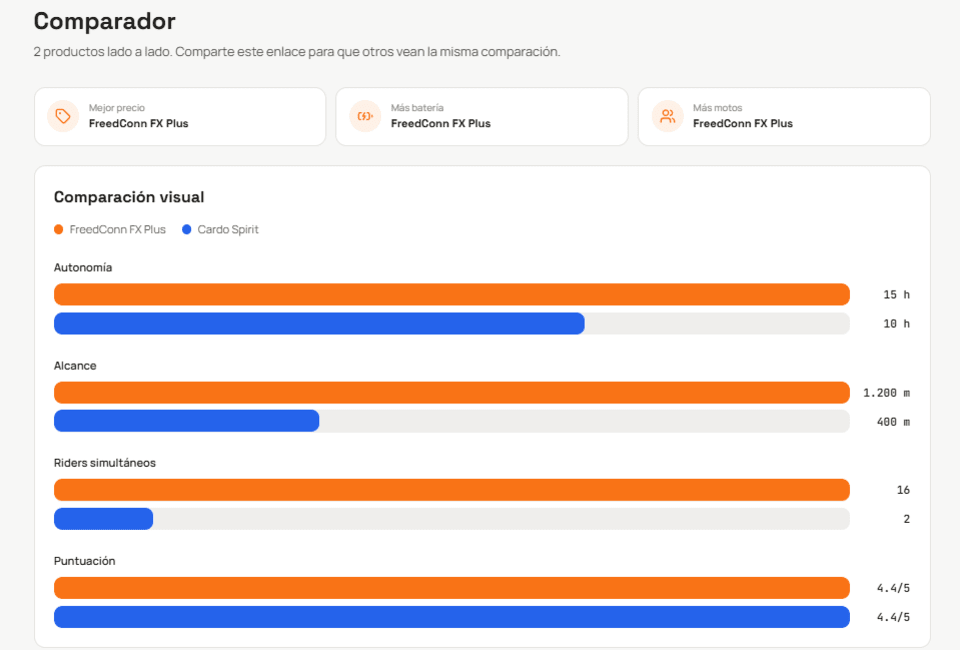
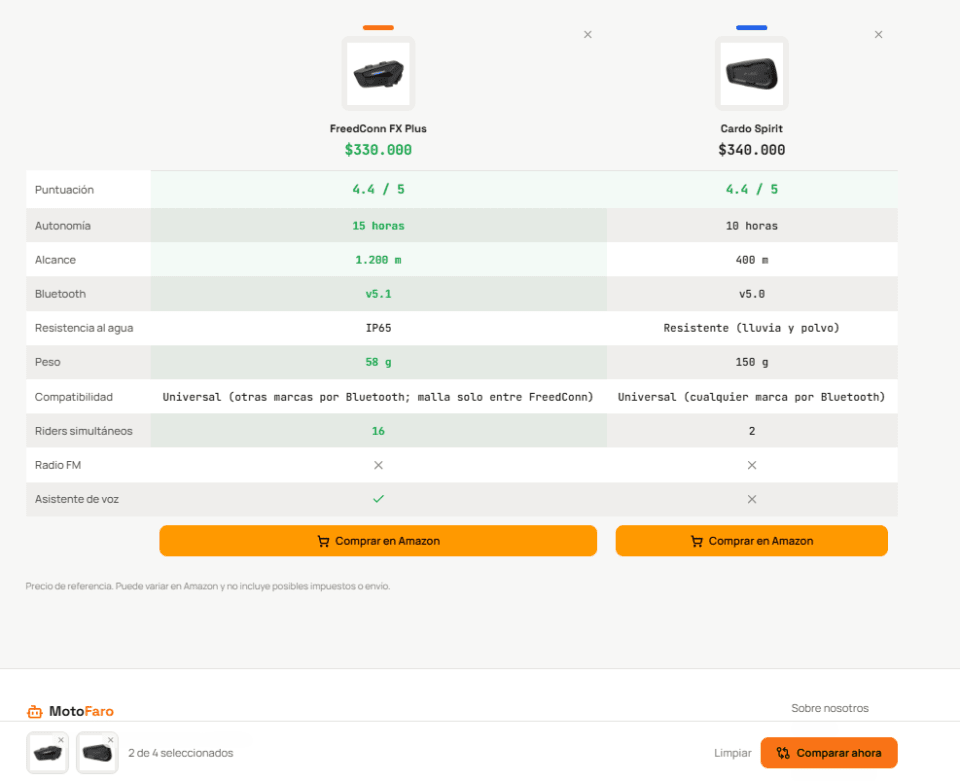

A motorcycle-gear comparison engine built in Next.js with an SEO-first architecture: filterable catalog, side-by-side comparison and a quiz recommender — all driven from a single data source and optimized to capture purchase-intent traffic. Self-initiated project, from zero to production.
View live siteTHE CHALLENGE
Someone searching "best motorcycle intercom in Colombia" is one click from buying. The challenge wasn't to design something pretty: it was to build a site where every product, category and comparison is an indexable, fast page with structured data — so Google understands the catalog and surfaces it exactly when someone is deciding what to buy.
Affiliate monetization is the business goal; technical SEO is what makes it possible. This project is the proof that I can build that foundation.
THE OUTCOME
MotoFaro is deployed and running: 12 scored products, category filters, six sort modes, a side-by-side comparison and a quiz that recommends based on your riding profile. This is the real site embedded — click to open it full.
Live view — click anywhere to open MotoFaro in a new tab.
THE NUMBERS
* Performance metrics measured with Google PageSpeed Insights on the production site. Affiliate monetization is in an early stage — this case documents the product build and its technical foundation, not revenue.
THE HARD PART
A comparison engine with product images, dynamic filters and many pages is usually heavy and slow. The challenge was keeping PageSpeed high AND the full catalog indexable at once. These are the decisions that made it possible.
What I solved
INSIDE
If your business lives on showing up in search, that's exactly the kind of technical foundation I build. Tell me about your project — I reply within 24 hours.